We value your privacy
This website uses technical, functional and analytical cookies that do not infringe on your privacy.
General purpose platform session cookies are usually used to maintain an anonymised user session by the server.

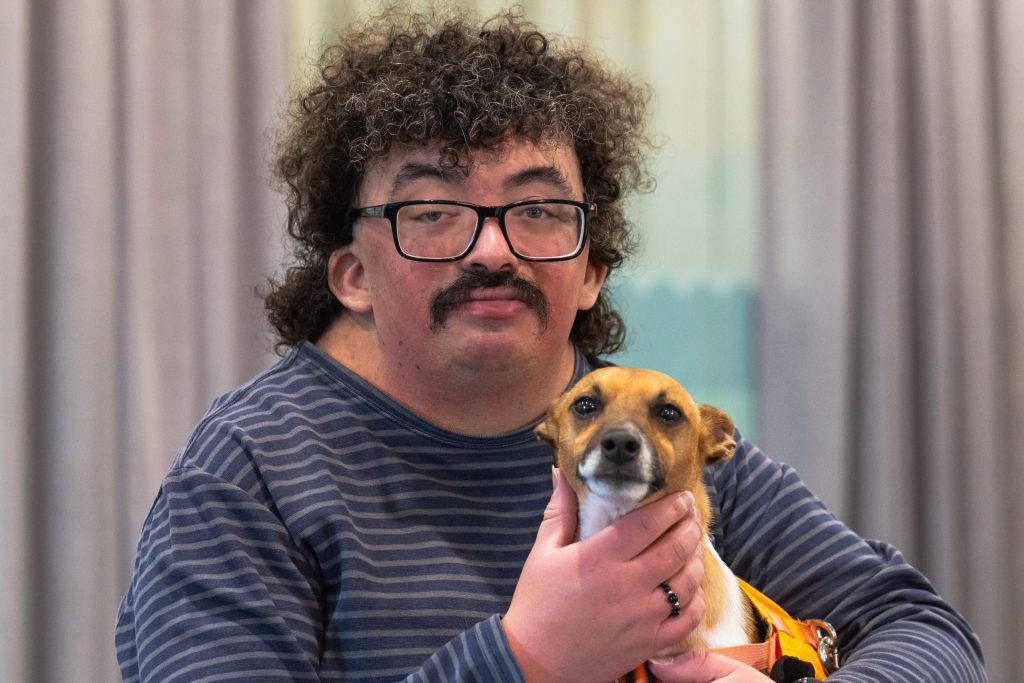
ID: Man sitting and facing the camera holding his pet dog.
For Malcolm Smith, independence doesn’t mean doing everything alone.
Instead, it means having the right support to live life on his own terms.
“There’s two types of independence,” Malcolm explains. ” Independence with help has been very much appreciated.”
Today, Malcolm lives independently with his dog, Bo, in a home that’s filled with routine, purpose and the confidence to enjoy everyday life. It’s a life that wasn’t possible before accessing support through the NDIS.
For Malcolm, support isn’t about someone taking over. It’s about having someone there when he needs it.
Whether it’s preparing healthy meals, attending medical appointments, getting out into the community or trying something new, having trusted support workers has helped Malcolm maintain his independence while building new skills and confidence.
“I’ve been able to cook better meals,” he says. “Just having someone with me when I need it to take me to doctor’s appointments and take me around if I want to go somewhere.”
His week is now full of activities that bring connection and enjoyment. Mondays are spent at an art group. Wednesdays are for cooking. Thursdays include water aerobics with one of his support workers, while Fridays are another opportunity to prepare a hearty meal. Monthly group dinners and social outings provide even more chances to connect with others, and weekends are often spent catching up with family.
These are things Malcolm says simply weren’t part of his life before.
“Yes,” he says. “I couldn’t do these things before.”
Before receiving NDIS supports, Malcolm spent many years living with chronic migraines that significantly impacted his daily life.
“For about 10 years I was mainly alone, very isolated,” he says. “Because of the pain… I wasn’t doing any of that. I wasn’t happy.”
The combination of physical health challenges and isolation meant everyday activities became difficult, and social connection was limited.
Today, life looks very different.
Support through the NDIS has helped Malcolm access community activities, maintain his home with the assistance of a cleaner, and receive equipment that has made a real difference to his independence.
A new mobility scooter has made shopping easier and given him the freedom to take Bo for walks.
“My new gopher has been extremely helpful with taking Bo on his walks,” Malcolm says. “And now I have something that helps me go to the shops better.”
It’s these practical supports that have opened the door to greater independence and a more connected life.
When asked what the right support means to him, Malcolm’s answer is simple.
“The right support is the ability to be yourself,” he says.
“To have someone help you be yourself and help you do your daily activities. And someone who pushes you – only a tiny little bit,” he says. “I don’t like to be pushed too much, only a tiny bit to do something different.”
That balance of encouragement and respect has helped Malcolm grow in confidence while remaining in control of his own life.
For Malcolm’s mum, Carolyn, watching her son’s confidence grow has been one of the greatest rewards.
“As a parent I am so relieved to have the supports in place through the NDIS because it has taken so much pressure off me,” she says.
After raising Malcolm and his sister on her own following the loss of Malcolm’s father when he was young, Carolyn spent many years as his primary support.
Today, she sees a very different Malcolm.
“It’s been fantastic as a parent to see Malcolm be able to grow through the NDIS and My Ability Pathway,” she says.
“The people who come in and support him are really caring and kind people, and I think that’s really important.”
Perhaps the biggest change has been Malcolm’s confidence.
“He was very scared in the beginning of having people coming into his home,” Carolyn recalls. “Now he’s really happy to have people come in. In the past he would never open the door, wouldn’t answer his telephone, and now to see his confidence grow… I’m just proud of the person he has become.”
Malcolm’s story is a reminder that independence looks different for everyone.
Sometimes, independence means asking for help. It means having people around who encourage you, respect your choices and provide the support you need to live the life you want.
With the right supports through the NDIS, Malcolm has gone from years of isolation to a life filled with connection, routine, confidence and choice.
And for Malcolm, that’s exactly what independence means.
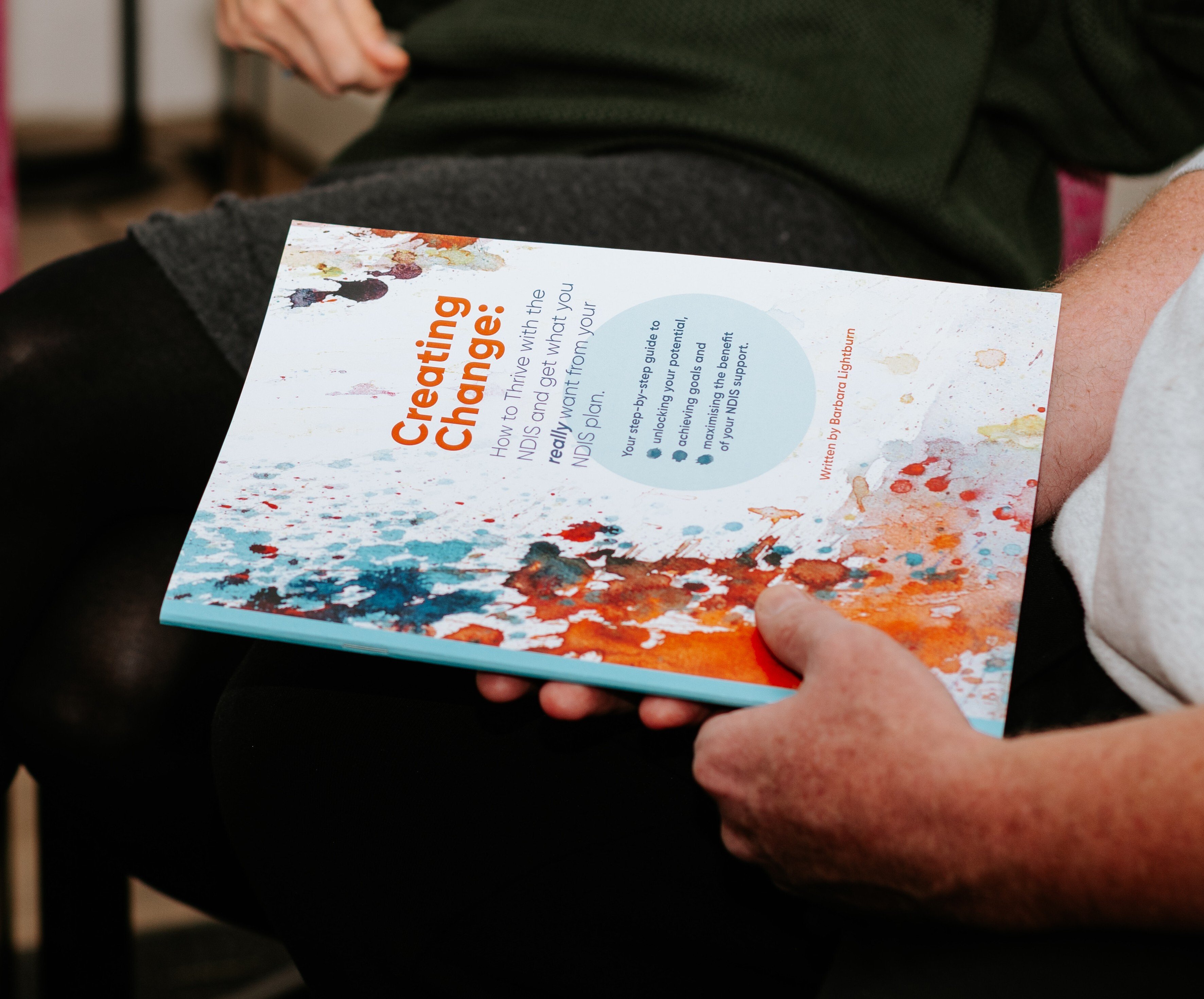
ID: A photo of a person holding the Creating Change book.

New year’s resolutions. A popular method of goal setting, but one that doesn’t tend to have the best success rate. Why?
Goals that fall by the wayside often have some things in common:
So, let’s explore creating goals.
Goal setting is something that gets talked about a lot in NDIS spaces. If you’re a participant, you’ll have been asked to set some goals for your NDIS plan. These can be anything you want, and sometimes it can be difficult to figure out what that might be.
If you work in the disability industry, or support a loved one with a disability, you’ll be looking to align outcomes with the goals of the participants you support – and you’ll have your own goals, whether they be work-based or personal.
Creating Change, written by Barbara Lightburn, is a resource to support anyone looking to hone their goal setting skills.
Top Tip – Write your goals down and monitor progress
Setting strong, personalised goals can be extremely beneficial in assisting you to achieve what you want to achieve. For many of us, having a written record and a way to track progress is very supportive. There are many ways to record your goals and monitor progress – from spreadsheets to apps to journalling, there is bound to be a method that will work for you.
At MAP, we’ve built a culture inspired by the importance of setting goals as a way to support all areas of life. Seeing our achievements gives us a sense of success, builds confidence, and empowers us to continue striving. No win is too small, and if you’re tracking your progress, you’ll get to see in real time just how far you’ve progressed, despite any setbacks or interruptions.
This is so important, because many of us notice shortcomings far more sharply than we recognise successes. Retraining your focus to be objective and positive helps you stay strong when times get tough.
Top Tip – Make your goals “SMART”
There are so many positives to learning to set goals – and beyond that, to adjust those goals when things change for you. Sometimes a goal no longer applies or may become unrealistic. Any number of things can change in the time we’re working to achieve the things we’re aiming for.
There’s a skill to strong goal setting, and it’s one that can be learned and honed. A popular method is “SMART” goals. SMART stands for:
Developed by George T. Doran, SMART goals help you be clear about what you want to do, support you to set a timeframe to keep you on track and accountable, ensuring it’s realistic and applicable to you, and assists with measuring your achievements.
On top of creating a SMART goal, you can break the goal down into manageable steps or actions. This will make it easier to monitor for those small wins and see your progress. Chapter 4 of Creating Change includes a helpful workbook section to guide you through this.
Check in and review your goals regularly – daily, weekly or monthly check ins work well for many goals, and allow you to adjust your focus, try new approaches and recognise what’s going well as you work towards your goals.
Top Tip – Develop a support network
Having support can help us towards our goals in a variety of ways. From encouragement to holding us accountable, a support network gives us people to rely on for help and perspective.
Different types of goals need different types of support. It’s important to consider who might be the best person, or group of people, to help out. From emotional support to professional guidance, there are options appropriate to every type of goal.
Online spaces are increasingly popular ways to connect with likeminded people, especially for those living rurally or regionally. Local clubs and groups might be an option too – for example, a book club or sports group could help with a goal around reading more, or learning a new fitness activity. Consider your budget and explore training or coaching options that may suit your needs.
Goals help us give our lives direction, supporting us to achieve and grow in the ways that we want. Consider your new year’s resolutions and think about how you might be able to refine and refocus them into strong, SMART goals. Have you made those small wins already? Celebrate them! Will you benefit from an accountability partner, or some guidance from someone with experience? Explore finding that support.
Most of all, remember your purpose. You set this goal for a reason. It’s yours to achieve.
