We value your privacy
This website uses technical, functional and analytical cookies that do not infringe on your privacy.
General purpose platform session cookies are usually used to maintain an anonymised user session by the server.

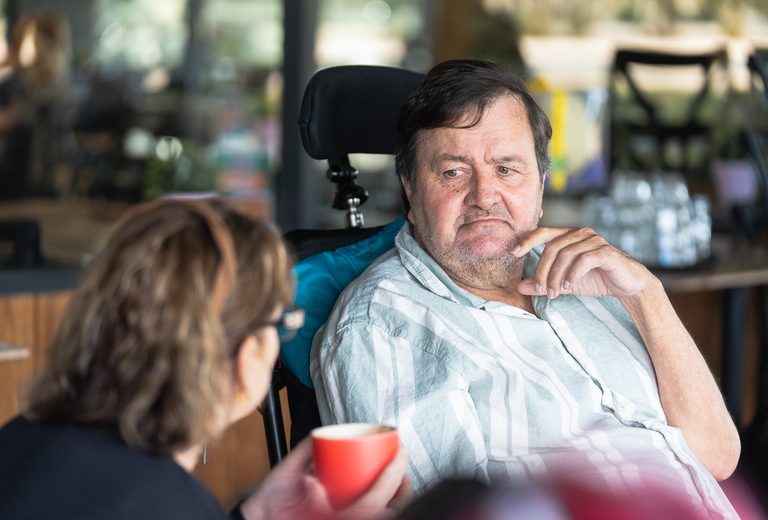
ID: Photo of Ian out at MAP’s Easter Morning Tea event.
For Ian and his family, moving into Specialist Disability Accommodation (SDA) in Nuriootpa has been about much more than finding an accessible house. It has been about creating a home that supports safety, independence, family connection and everyday choice.
After experiencing multiple strokes in 2023, Ian’s life changed significantly. Once a truck driver who had lived independently, Ian became wheelchair bound and needed a home designed around his physical support needs. His daughter, Regina, said the family knew that having access to an SDA home would be important for Ian’s future.
“Having access to an SDA house was what we were needing for his needs going forward,” Regina shared.
Specialist Disability Accommodation is purpose-built housing for NDIS participants with extreme functional impairment or very high support needs. For people like Ian, SDA can make daily routines safer, easier and more comfortable by removing barriers within the home and supporting greater independence.
For Ian, the difference is felt in the everyday details. Regina explained that his SDA home is “designed better” for him because it caters to his needs as a wheelchair user. Open spaces allow him to move through the home more freely, while accessible design features support the routines, interests and choices that continue to matter to him.
“He’s always enjoyed cooking,” Regina said, describing how adjustable kitchen benches allow Ian to remain involved in an activity he enjoys. “Having benches that can move up and down… cater for people who are in wheelchairs.”
Accessible housing is often spoken about in terms of equipment, floorplans and support ratios, but its real value is found in the way it helps people participate in their own lives. Ian’s Nuriootpa SDA home gives him room to move, space for safe transfers and the ability to do meaningful things for himself.
Regina shared that Ian can wheel himself to the front door and open it for her when she visits. It is a simple moment, but one that reflects the importance of independence, privacy and dignity within the home.
“He can wheel himself up,” Regina said. “The bathroom’s big enough so he can get in and out there… he’s got the big space to be able to be lifted to and from bed into wheelchair.”
One of the most important parts of Ian’s SDA journey has been location. Ian lives in the Barossa, close to Regina and his grandchildren. For their family, being near familiar places and people was an important part of finding the right long-term home.
Regina explained that Nuriootpa was a good fit because it kept Ian close to family routines and community connections. “It’s only 30 minutes away from where I live and my kids go to school here in the Barossa,” she said. “We’re always over here… the plan long term [was] to be able to have him as close to family as possible.”
This is why Specialist Disability Accommodation in regional communities like the Barossa matters. Purpose-built SDA homes can help people with disability remain connected to their families, local services, support networks and the communities they know, while receiving the daily support they need to live safely and well.
Ian’s story is a reminder that the right SDA home does more than meet physical access requirements. It supports confidence, comfort, connection and choice. It gives families reassurance that their loved one is living in a place designed around their needs, while also creating opportunities for the person to stay involved in everyday life.
At My Ability Pathway, we believe accessible housing should support people to live with dignity, independence and a strong sense of belonging. Through our Supported Independent Living services within SDA homes across the Barossa, we work alongside participants, families, support coordinators and housing providers to help people build a life that reflects their needs, preferences and goals.
We currently have a vacancy in a Nuriootpa Specialist Disability Accommodation home. If you are eligible for SDA, or know someone who may be looking for accessible housing in the Barossa, we encourage you to reach out to our team. More information about SDA can be found on our Barossa SDA page, and details about our current Nuriootpa vacancy are available on our Current Vacancies page.
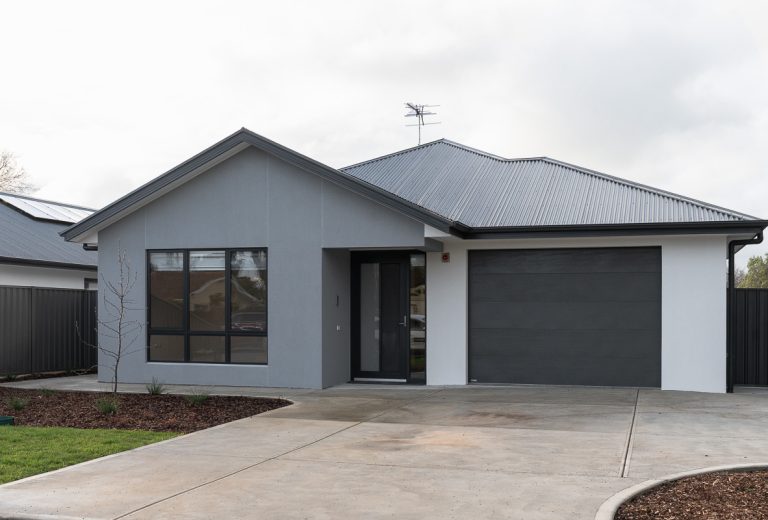
ID: Photo of the front of a modern SDA home in Tanunda.
Finding the right home can be life-changing. For people with disability, a home that is safe, accessible and designed around individual needs can create new opportunities for independence, confidence and connection.
In the heart of Tanunda, three new Specialist Disability Accommodation (SDA) dwellings are helping create that opportunity. Built by Metcalf Group (SA), with Metcalf Inclusive Living as the registered SDA Provider, these purpose-built homes have been thoughtfully designed to support people to live with greater comfort, choice and dignity.
My Ability Pathway provides the Supported Independent Living (SIL) supports within the homes, working alongside residents to build daily routines, develop skills, participate in their community and live as independently as possible.
Each Tanunda SDA dwelling has been created with accessibility at the centre of its design. The homes include large bedrooms with individually controlled heating and cooling, allowing each resident to enjoy their own level of comfort throughout the year. Every bedroom also includes a modern, fully accessible ensuite, supporting privacy, dignity and ease in everyday routines.
Shared living has also been carefully considered. With two separate living areas and a generous undercover alfresco, residents have space to spend time together, welcome family and friends, or enjoy quiet moments in a more private setting.
Accessibility continues throughout the entire property. From the kerb through to the alfresco area, clear and continuous pathways support safe and easy movement for wheelchair users. Practical features, such as an accessible front entry door with an integrated sliding screen, help make the homes welcoming, functional and easy to live in.
Built to the High Physical Support SDA Design Standard, the homes include provisions for future ceiling hoists, automated doors and blinds, and the installation of handrails. These features mean the environment can be adapted as a person’s support needs change over time, helping residents feel secure in a home that can continue to support them into the future.
Soft ambient hallway lighting has been installed to improve visibility in the evening while creating a warm, calm atmosphere. In the kitchen, accessible design features include an adjustable-height benchtop, provision for adjustable overhead cupboards and a side-opening oven, supporting residents to take part in daily living tasks with greater ease and confidence.
Located in Tanunda, the homes offer a balance of quiet residential living and connection to local services. Foodland, pharmacies, cafés and shopping are only a short drive away, while Tanunda Hospital is located nearby. For residents, this means everyday essentials, health services and community activities are within easy reach.
Safety and sustainability have also been considered throughout the design. A commercial fire sprinkler system, monitored by the Metropolitan Fire Service, provides added peace of mind for residents, families and support providers. Solar panels and battery storage support improved energy efficiency, while landscaped gardens with automatic irrigation create an attractive, low-maintenance outdoor environment to enjoy throughout the year.
SDA and SIL often work together, but they are different parts of a person’s NDIS support. SDA refers to the physical home – the purpose-built dwelling designed for people with significant functional impairment or very high support needs. SIL refers to the support a person receives to live as independently as possible, including help with daily routines, personal care, skill development and community participation.
In Tanunda, Metcalf Group (SA) has built the SDA dwellings, Metcalf Inclusive Living is the registered SDA Provider, and My Ability Pathway provides the Supported Independent Living supports. Together, these roles help create homes where residents can feel safe, supported and truly at home.
If you would like to learn more about Specialist Disability Accommodation, the difference between SDA and SIL, or the current vacancies, click here for more information and to submit an expression of interest or click the button below.
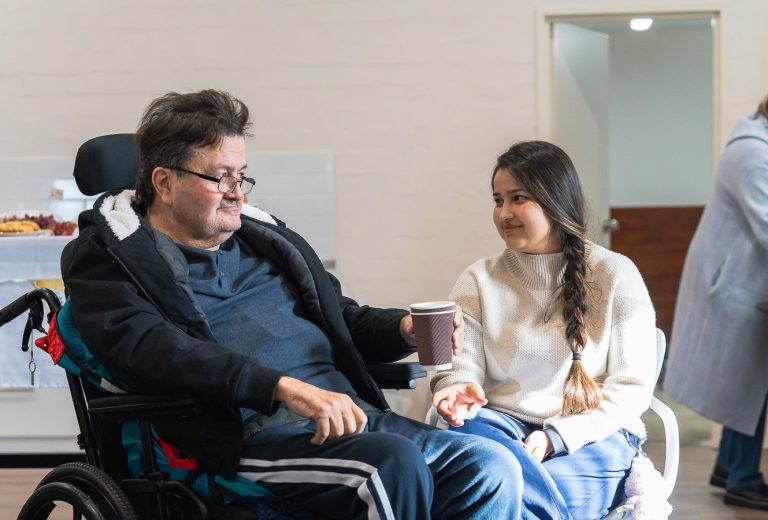
ID: Man in a wheelchair drinking a hot drink next to a female Support Worker at a Morning Tea.
For Ian and his family, the past few years have brought significant and unexpected challenges. Once an interstate truck driver who valued his independence, Ian’s life changed dramatically after experiencing multiple strokes in 2023. Today, he is settled in a Specialist Disability Accommodation (SDA) home in Nuriootpa, where he has the care, accessibility and support he needs to live safely and comfortably.
Before his strokes, Ian lived independently in Eudunda. Although he had already stopped interstate truck driving due to balance difficulties associated with normal pressure hydrocephalus, he continued to manage life on his own. His daughter, Regina, had noticed changes in his mobility, including a shuffling gait and increased periods of sitting or resting.
In September 2023, Ian suffered a haemorrhagic stroke and multiple lacunar strokes, beginning a lengthy and complex health journey. According to Regina, Ian experienced a total of 11 strokes. He had originally been admitted to hospital to receive treatment for his pre-existing hydrocephalus, but this treatment was ultimately deemed too risky due to the severity and frequency of the strokes.
Following his hospitalisation, Ian was unable to return home. Instead, he spent months moving between several hospitals and rehabilitation settings while his family and support team worked to identify the most appropriate long-term housing solution.
Ian entered the NDIS for the first time following his strokes. From the outset, it was clear that his support needs had changed significantly and that accessible housing would play a critical role in his future. During his initial NDIS planning meeting, Ian’s daughter and nominee, Regina, worked alongside his Support Coordinator to advocate for Specialist Disability Accommodation funding.
Given his high care needs, SDA funding was included in Ian’s plan, and he was also granted Medium Term Accommodation (MTA) while suitable long-term housing was identified.
Like many SDA journeys, Ian’s pathway involved a large team working together behind the scenes.
His Support Coordinator collaborated closely with My Ability Pathway’s leadership team, hospital social workers, the YIPRAC team and housing providers to ensure the necessary evidence and documentation were submitted correctly. The process required ongoing communication, frequent follow-up and coordination between multiple stakeholders.
While these administrative processes can often be complex, the goal was to minimise stress for Ian and his family and ensure a smooth transition into appropriate housing.
Location was one of the most important considerations for Ian and his family.
With strong ties to the Kapunda and Eudunda region, Ian wanted to remain as close as possible to his family, while also having access to specialised housing and support services. His Support Coordinator explored available SDA options through Housing Hub and by contacting SDA providers directly. Several properties were considered, but the priority remained finding a home within a reasonable distance of family and community connections.
Ian initially moved into an SDA home in Gawler East, providing him with an immediate solution when suitable accommodation became available. At the same time, plans were underway for new SDA homes to be developed in Nuriootpa, much closer to the area Ian and his family called home.
When the opportunity arose, Ian transitioned into one of the newly completed SDA homes in Nuriootpa, allowing him to be even closer to his support network and maintain stronger connections with family and community.
Today, Ian is enjoying the benefits of living in a purpose-built SDA home that meets his accessibility and support needs. His journey demonstrates the importance of early advocacy, collaborative planning and person-centred decision-making when navigating the SDA process.
Most importantly, it highlights how the right home can do much more than provide accommodation – it can restore connection, improve quality of life and create a foundation for greater independence and wellbeing.
For Ian and his family, finding the right SDA home was about more than a house. It was about finding a place where he could feel safe, supported and close to the people who matter most.
There are currently vacancies available in SDA homes in both Nuriootpa and Tanunda. These homes offer an opportunity for eligible participants to access purpose-built accommodation close to local services, community connections and support networks.
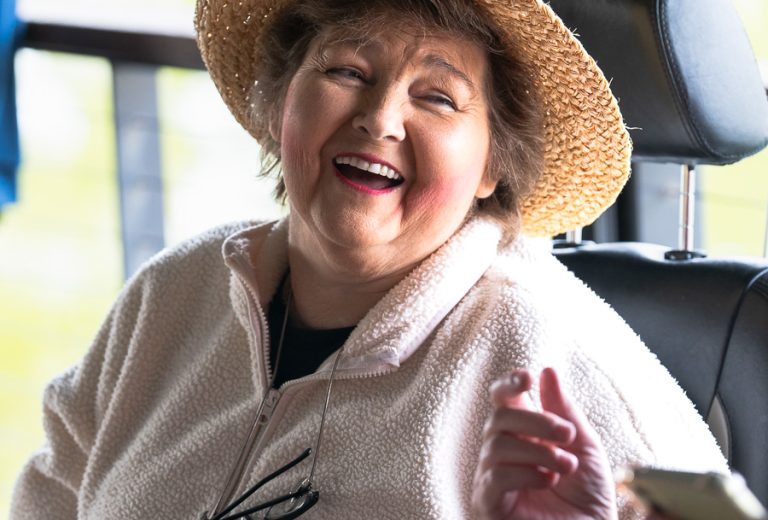
ID: A woman laughing wearing a broad brim straw hat.
Christine remembers the fear more than anything.
Not fear of the unknown – but fear of the everyday.
The simple, human moments most of us take for granted had become the hardest. Standing. Moving. Reaching. Even holding her grandchildren came with a quiet, constant worry in the back of her mind: What if I fall? What if I hurt them? What if I hurt my husband trying to manage on our own?
Before moving into Specialist Disability Accommodation (SDA), life had become a careful balancing act – one where the risks were growing and the support just wasn’t enough.
Her home, though filled with love and familiarity, wasn’t built for what she needed.
“My bathroom [was] very big,” Christine explains, “but it’s not big enough for my wheelchair or my lifter. My husband was able to help me, but not always. He’s getting older too… I had to come here so that I could get the help that I needed so that I didn’t hurt Tony.”
It’s a reality many people face quietly – where love and care alone can’t replace the right environment, the right design, and the right level of support.
Moving into SDA in Gawler changed things for Christine – but not in the way people sometimes assume.
It didn’t take away her independence.
It gave it back.
“I’m getting the help that I need and I’m so much more relaxed… I can concentrate on getting better and building my strength up.”
With the right supports in place, Christine’s focus shifted – from simply getting through the day, to actually living it.
There’s something powerful about feeling safe in your own home. It creates space for everything else – healing, confidence, connection.
And for Christine, something else returned too: hope.
“Oh definitely… I used to be frightened to pick up my grandchildren… but now I’m quite confident in having them come visit me and sit on my lap… I can cuddle them and I can do the things that I need to do to be a great granny.”
That confidence – the ability to be present with the people you love without fear – is what real support looks like.
One of the biggest misconceptions about SDA is that it feels clinical or restrictive.
Christine’s experience tells a very different story.
“It doesn’t stop you from living your life, it helps you.”
Her home isn’t defined by limitations – it’s shaped around possibility.
She bakes. She uses her computer. She hosts friends. She celebrates milestones.
“We had Christmas here and my friends came… we had the best day.”
And when she needs support, it’s there – without hesitation.
“There’s nothing they won’t do for you… If I get stuck… they’re right there.”
This is what person-centred support looks like in action: an environment designed not just for access, but for living well.
For anyone unsure about SDA, Christine doesn’t hesitate.
“Do it, do it. It’s a must. If you’re not sure, if you’re stumbling, if you’re falling – you have to come here and get help, because this is the place to be.”
It’s simple. Honest. And grounded in lived experience.
Christine’s story is just one example of what’s possible when the right environment meets the right support.
And now, more opportunities are becoming available.
Three brand-new SDA homes are being developed in Tanunda, with vacancies expected from July 2026. Designed with accessibility, comfort, and independence in mind, these homes offer:
It’s important to note that while these homes are delivered in partnership with SDA provider, Metcalf Group (SA), My Ability Pathway provides the Supported Independent Living (SIL) supports – ensuring participants receive consistent, person-centred care aligned with their goals.
SDA isn’t just about accessible housing.
It’s about reducing risk.
It’s about restoring confidence.
It’s about creating the conditions where people can reconnect with what matters most.
For Christine, that meant holding her grandchildren again without fear.
For others, it might mean cooking independently, pursuing hobbies, or simply feeling safe enough to relax.
Whatever the goal – the right environment makes it possible.
If you or someone you support could benefit from SDA, now is the time to explore your options.
Secure your future home – complete an Expression of Interest.
Conditions apply.
Our team is here to guide you through the process, answer your questions, and help you determine whether SDA is the right fit. Let us know if you would like one of our complimentary SDA Information Packs to be sent to you.
Because everyone deserves a home that supports not just their needs – but their life.
