We value your privacy
This website uses technical, functional and analytical cookies that do not infringe on your privacy.
General purpose platform session cookies are usually used to maintain an anonymised user session by the server.


ID: Photo of the front of a new Specialist Disability Accommodation house in Nuriootpa.
Looking for Specialist Disability Accommodation in Nuriootpa? Finding a suitable home involves more than checking whether a room is available. It means considering how the space works for you, what support you need and whether the location helps you stay connected to the people and places that matter. My Ability Pathway’s current vacancies page lists High Physical Support SDA in Nuriootpa, with housing provided by New Dawn Housing and Supported Independent Living supports delivered by MAP. If you are exploring your next move, here is a starting point for learning about the home and asking the questions that matter to you. Availability can change, so please contact MAP to confirm current vacancies and suitability.
Watch the Nuriootpa SDA video below as a starting point for exploring the home. As you watch, note what you would like to ask about or see during a visit. A video can help you prepare questions, but it cannot confirm whether a home will meet your individual accessibility, equipment or support needs.
MAP’s Nuriootpa vacancy listing describes a purpose-built High Physical Support home with modern accessible design, spacious shared living areas and a private bedroom with an ensuite. It also identifies proximity to local services and community facilities. These features are worth considering in relation to your own routines. How would you move between your bedroom, bathroom and shared spaces? Where would you spend time with visitors? What would help you take part in household activities in the way you prefer? The NDIS describes High Physical Support housing as including a high level of physical access for people who need very high levels of support. That category does not tell you every detail of an individual property. Ask which equipment and technologies are installed, which are provisions for future installation and what would need to be arranged for you.
New Dawn Housing is identified as the housing provider, while MAP provides the Supported Independent Living services. MAP’s listing describes 24/7 SIL support at the Nuriootpa home. Your individual assistance, overnight arrangements and any shared supports still need to be discussed; 24/7 support does not automatically mean continuous one-to-one assistance. SDA relates to the specialist home, while SIL relates to assistance or supervision with daily tasks. They are separate supports, and SDA funding does not include personal care or SIL. For an introduction, read MAP’s guide to SDA and SIL. Ask for clear information about the housing agreement, support agreement, charges and who to contact about each aspect.
For someone who wants to live in the Barossa, location may be an important part of the decision. Consider the people you want nearby, the appointments you attend and the places you enjoy visiting. Rather than relying on the phrase “close to services”, ask about the actual journey: transport, accessible routes, travel time and any assistance required. Your home should be considered alongside your wider life. Shared living also deserves discussion. Ask about the proposed household, privacy, visitors and how different routines can work together, while respecting other residents’ confidentiality.
SDA is for eligible NDIS participants with extreme functional impairment or very high support needs. A listed vacancy does not establish eligibility or guarantee that the property matches your approved funding and circumstances. Your support coordinator or chosen supporter can help you gather questions and understand the information provided. The NDIA explains that SDA residents pay a reasonable rent contribution and other day-to-day living costs, such as electricity. Request a clear breakdown of the costs for this particular home before deciding. There is no need to work through every question alone, but your preferences should remain central throughout.
If you would like to explore the Nuriootpa SDA vacancies, view the New Dawn Housing property listing on Housing Hub, check MAP’s current vacancies or contact MAP to ask about availability and a possible viewing. Call 08 8563 2569 or email ndis@myabilitypathway.org. Whether you are making an enquiry for yourself or supporting someone with their permission, the starting point is the same: what would make this a suitable home for the person who will live here?
Contact MAP to confirm Nuriootpa SDA availability, discuss your needs and ask about a viewing.
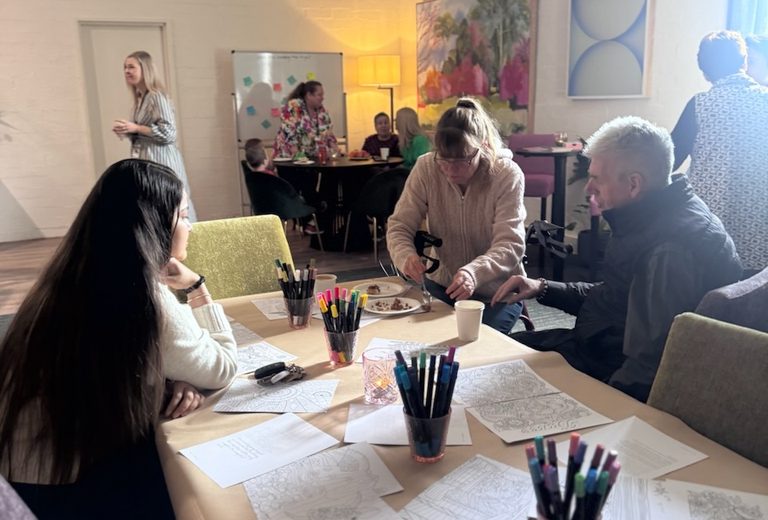
ID: Group of people sitting around a table with colouring in pages.
At My Ability Pathway, wellbeing is something we talk about often, but it is also something we need to make time for intentionally. In the disability sector, so much of the work is centred on supporting others – often through complex, emotional and physically demanding days. For frontline team members in particular, the rhythm of care can mean giving a lot of yourself, day after day.
Recently, we held our Wellbeing Together event at MAP HQ. It was planned around the time of R U OK? Day, but with a slightly different focus. While awareness days can be important reminders to check in, we wanted to create something that felt practical, gentle and ongoing – a space where people could pause, connect and be reminded that wellbeing is not a one-day conversation.
The morning itself was simple, but in many ways that was what made it meaningful. Around the room were small wellbeing stations designed to give people different ways to slow down. Some team members sat together colouring in, enjoying the quiet focus and conversation that can come from doing something with your hands. Others took time to reflect, sitting with prompts that invited them to notice what was happening in their internal world. There was also a massage chair for a much-needed neck and back massage, along with good food, drinks and time to talk.
Nothing about it was complicated. And perhaps that was the point. Sometimes wellbeing begins with permission – permission to step away from the pace of the day, to sit beside someone you may not usually work with, to take a breath, or to notice that you are carrying more than you realised.
Wellbeing Together was primarily created for our team, while also being open to clients. It gave us an opportunity to come together in a way that was relaxed and human, away from tasks, rosters, emails and routines. It was also a chance to bridge the perceived gap that can sometimes exist between frontline and administration teams.
In an organisation like MAP, every role contributes to the same purpose. Some people provide direct support in homes and communities. Others coordinate services, manage systems, communicate with families and stakeholders, or help keep the organisation moving behind the scenes. Events like this remind us that we are not separate groups doing separate work – we are one team, supporting people in different but connected ways.
For people working in the disability sector, wellbeing cannot be an afterthought. Supporting people with significant disabilities can be deeply rewarding, but it can also be exhausting. The emotional labour, the responsibility, the unpredictability and the physical demands can add up quietly over time.
That is why checking in matters – not just with the people around us, but with ourselves. Am I actually doing okay? What do I need right now? Who can I talk to if I am not coping? These questions are not signs of weakness. They are part of staying well enough to keep showing up with care, patience and compassion.
We also used the event as an opportunity to connect our team with local wellbeing resources. Lifeline has recently opened at the Barossa Community Centre on Second Street in Nuriootpa, making support more accessible within our community. While Lifeline is well known for suicide prevention, its services extend beyond crisis support. They offer free, confidential counselling, unlimited support sessions, mental health and emotional wellbeing support, and a safe space to talk through life’s challenges – big or small.
You do not need to be in crisis to reach out. Support can be for stress, anxiety, grief, relationship challenges, work pressures or the everyday weight of life. Knowing where to turn before things become overwhelming is an important part of looking after ourselves and each other.
We also encourage our male team members to explore Good Better Best Men, a volunteer-run organisation offering open men’s groups and workshops focused on connection, wellbeing and supporting one another. Sometimes the hardest step is starting the conversation, and community spaces like these can make that step feel a little easier.
Wellbeing Together was never about replacing formal supports or suggesting that one morning could meet every need. It was about reminding our team that support exists, that connection matters, and that caring for yourself is part of caring well for others.
Our hope is that events like this help create a culture where wellbeing is not only spoken about when things are difficult, but woven into the everyday. A culture where people feel safe to say they need a moment, where reaching out is encouraged, and where no one feels they have to carry things alone.
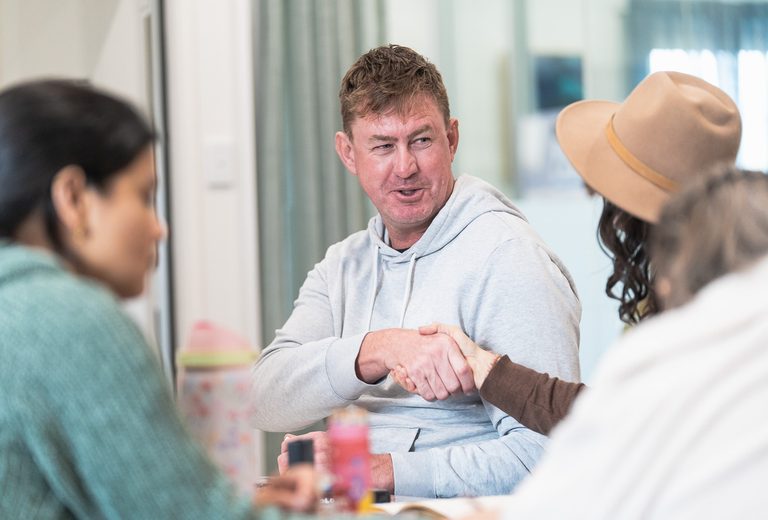
ID: Man sitting at a table and shaking hands with a women wearing a hat
When Ashley reflects on his journey, he doesn’t begin with what has been lost. He begins with gratitude, perspective and a steady belief that each day still holds the possibility of something good.
“It’s been a challenging journey, but I think it’s an exciting journey,” Ashley shares. “Every day I face my challenges, yet that is okay, my cup is half full. I’m thankful for what I have today and where I’ve come from if we looked at it from where I was to where I’m now.”
It is this sense of optimism that has carried Ashley through a period of enormous change. After becoming unwell, Ashley found himself in hospital in Adelaide, facing a future that suddenly looked very different from the life he had known. Independence, something he had once been able to rely on without much thought, was no longer guaranteed. Everyday tasks such as showering, getting dressed and moving through the day now required support.
“I no longer had independence anymore,” Ashley says. “I could no longer do what I used to be able to do and I needed help with my daily tasks.”
That adjustment was not only physical. For Ashley, coming to terms with the change also meant working through the emotional weight of uncertainty. He was trying to understand what life might look like, how he would manage, and how he could rebuild a sense of control. While the experience was difficult, Ashley was surrounded by family who helped him through those early stages.
At the time, Ashley and his family were living around two and a half hours from Adelaide. Being away from his wife and two boys during his hospital and rehabilitation journey was hard. As rehab continued, Ashley moved to the Barossa, where family support and local services helped make his recovery feel more possible.
A key part of that shift was discovering support close to home. Ashley was able to access hydrotherapy in Nuriootpa, continuing the rehabilitation he had begun in hospital. From there, more local supports became part of his life, including physiotherapy, occupational therapy, exercise physiology and community-based activities.
For Ashley, returning to the Barossa was more than a practical decision. It was a homecoming. A Barossa local, born and bred, he knew the area, the people and the sense of community that had shaped him. Moving back gave Ashley the chance to be closer to the supports, relationships and familiar places that could help him keep moving forward.
“The whole community piece is a huge part for me,” Ashley explains. Before becoming unwell, connection and supporting others had been a big part of his identity. When illness changed his daily life, that sense of involvement was something he deeply missed. Rebuilding those connections became an important part of his wellbeing.
Since moving back, Ashley has found strength not only in formal supports, but in the everyday power of community. He speaks about social outings, local groups and shared experiences with others who understand pain, fatigue and the challenges that are not always visible to the outside world.
“We’re all living through these similar things,” Ashley says. “Everyone has a very challenging journey and I think rolling this together, we need to support and be there for each other.”
That shared understanding matters. Ashley knows that not every disability, illness or ongoing health challenge is immediately visible. He has noticed that when people are not using a wheelchair or walking aid, others may assume they are okay. For Ashley, spaces where people can speak openly, feel understood and be met without judgement are essential.
Connection has also supported Ashley’s confidence, self-worth and passion for advocacy. His journey has helped him see how important it is for people to have someone to talk to, somewhere to belong, and access to the right supports in their own community. He believes there is value in more local opportunities where people can connect, share and support one another.
Acceptance has been a long process. Ashley is honest about that. There are days that are harder than others, and the journey has required him to get to know what he describes as “the new me”. But even within that reality, Ashley continues to choose hope.
“Some days are worse than others yet I’m thankful for every day,” he says. “There are good things to look forward to.”
Ashley’s story is a reminder that rehabilitation is not only about appointments, exercises or clinical progress. It is also about family, community, connection and having the right supports close enough to make daily life feel achievable. For Ashley, coming home to the Barossa has meant being surrounded by people and services that support his healing, independence and sense of purpose.
His cup-half-full outlook does not ignore the challenges he faces. Instead, it makes space for them while still recognising how far he has come. Ashley’s optimism, honesty and commitment to supporting others continue to shape his journey – one day, one connection and one step at a time.
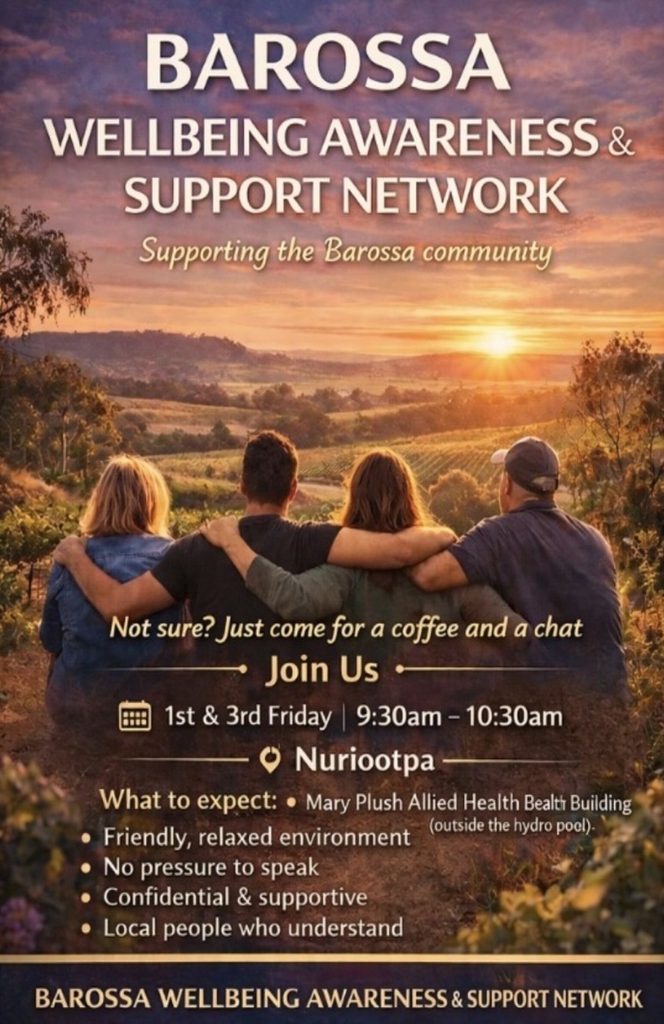
Ashley also helps run the Barossa Wellbeing Awareness & Support Network, held on the 1st and 3rd Friday of each month from 9:30am to 10:30am at the Mary Plush Allied Health Building. The group offers a friendly, relaxed and confidential space where there is no pressure to speak, just support from local people who understand. See the poster below for more information.
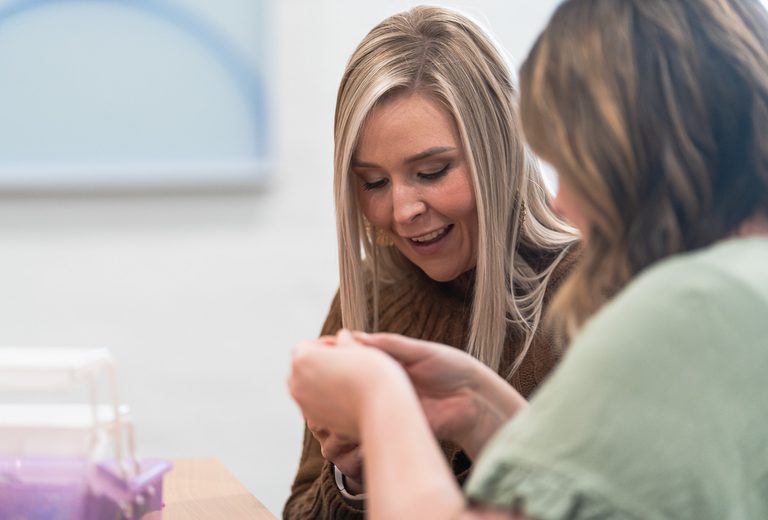
ID: Photo of two women making bracelets.
When Bianca joined My Ability Pathway as our new HR & Payroll Administrator, she stepped into more than a new workplace. She stepped into a new industry, a new role, and a team she says made her feel welcome from the very beginning.
“I’m brand new in the disability sector,” Bianca shared. “I have never worked in the disability sector…. I’m brand new to the role.”
But while there has been plenty to learn, Bianca says one thing stood out quickly: the support around her.
“Everyone is so supportive. It’s very inclusive,” she said. “From day one I’ve been part of the team, whether I’ve been part of the industry or not. I’ve felt very welcome.”
Outside of work, Bianca finds meaning and release through watercolour painting. What began around two years ago during a deeply difficult time has become an important part of how she expresses herself and makes sense of her experiences.
“I started about two years ago just after the passing of my dad,” Bianca explained. “I didn’t have the opportunity to go back home or to see him, or visit him in hospital. So I struggled with the grief process and I feel like art has given me the opportunity to deal with that grief.”
For Bianca, painting is not about perfection. It is about having somewhere safe to put feelings that can be hard to say out loud. It is a healthy coping mechanism, a creative outlet, and a reminder that expression can take many forms.
“It’s been really freeing in a sense,” she said. “I feel like that’s what art means for a lot of people. They use it as a coping mechanism, as a healthy coping mechanism.”
This year, Bianca took another brave step by submitting one of her artworks to the SALA Festival’s BE SEEN exhibition, presented by Barossa Village. The exhibition celebrates “bold journeys, fearless creativity, and the vibrancy of those souls often overlooked,” with the full collection on display at Barossa Village Lodge in Nuriootpa from 3–31 August.
Creative arts can offer people a way to communicate what words cannot always hold. Whether through painting, drawing, music, writing, movement or craft, creativity can help people explore emotion, identity, connection and healing in a way that feels personal and empowering.
For some, art is a quiet space to reflect. For others, it becomes a way to share a story, celebrate culture, process grief, or feel connected to community. Exhibitions like BE SEEN are important because they create space for those stories to be recognised, valued and celebrated.
Bianca’s artwork carries part of her own story, including why she began painting and why she believes art matters.
“I think it’s a really great tool for people to utilise when they need a way to express their feelings, to deal with their grief,” she said. “For me it was very hard, I didn’t have any family here to talk to and that was a way of expressing what I felt.”
We are proud to celebrate Bianca not only as part of the MAP team, but as someone willing to share her creativity and personal journey with the wider community. Her story is a beautiful reminder that creativity can help us process life’s hardest moments, connect with others, and be seen. You can visit the BE SEEN full collection at Barossa Village Lodge, 14 Scholz Avenue, Nuriootpa, from 3–31 August, Monday to Friday, 8:30am–4:30pm.
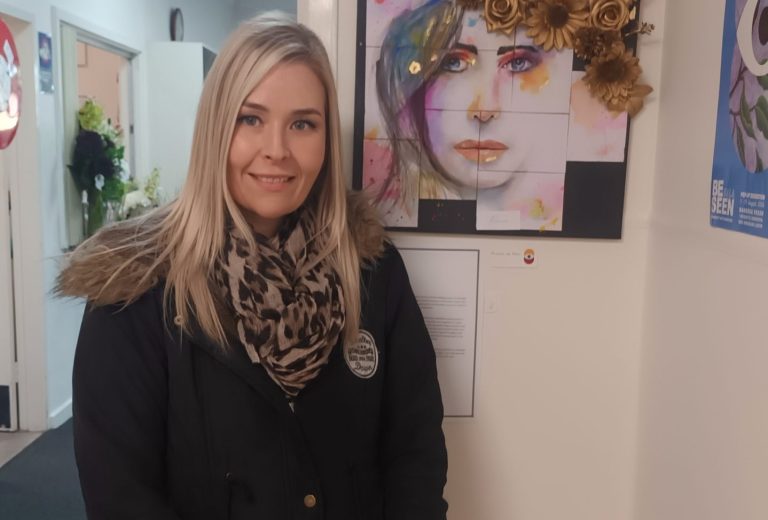
Bianca at the Barossa Village SALA Exhibition Opening on Monday 3 August 2026.
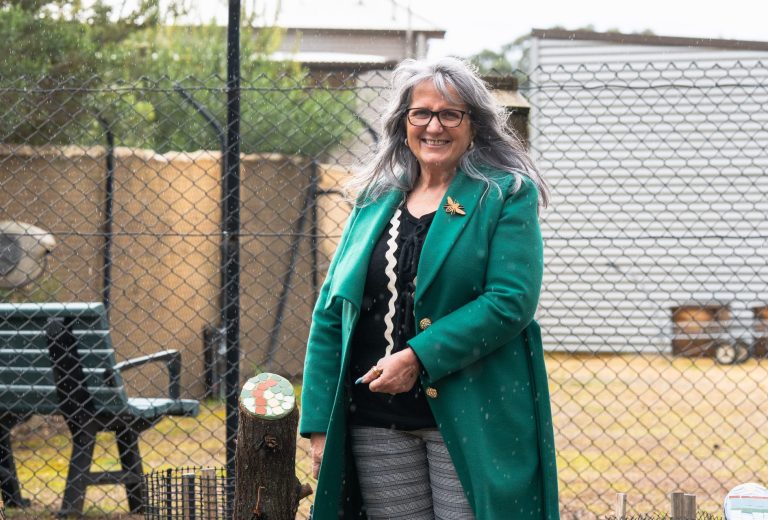
ID: Reta standing next to her mosaic which is part of the Reconciliation Mosaic Project at Barossa Bushgardens.
Sometimes, the people who have the greatest impact are the ones who never set out looking for recognition.
For those who know Reta, it will come as no surprise that after decades spent supporting others, advocating for the disadvantaged and championing equality, she still speaks about her work with the same passion and conviction that first drew her into the sector.
In fact, she was preparing to retire.
“I was 60 years old and I was going to retire,” she laughs.
Instead, an opportunity arose at My Ability Pathway. Although administration was completely new territory, Barbara and Charlotte recognised the incredible depth of knowledge and experience Reta could bring to the organisation. Today, she continues to support the team, mentor colleagues and share her wisdom whenever needed.
“I feel very privileged that they value my opinion when it comes to community,” she says.
And what an opinion it is.
Reta’s journey began with a childhood dream of becoming a nurse. After moving to the Barossa in her late twenties, she met Sophie, then Director of Nursing at Barossa Village, who offered her a shift that would change the course of her life.
“The rest is history,” she says.
Following a decade in aged care and some significant personal experiences, Reta discovered a calling that would shape the rest of her career.
“I came to the realisation that there were people who didn’t have a voice and weren’t being heard,” she explains.
“That’s what led me to become an advocate.”
Over the years, Reta has worked across disability, homelessness, domestic violence and child protection, but she always finds herself returning to disability support.
For Reta, advocacy has never been about speaking for people. It has been about ensuring people are heard and supported to live the lives they choose.
“I come from the belief that everybody is equal and that we all have the right, given the opportunity, to live our life to our full potential and be treated with dignity, irrespective of where we come from and who we are.”
It is a philosophy that has guided her both personally and professionally.
Anyone who has worked alongside Reta knows that her knowledge is immense, but what stands out even more is her unwavering passion for people.
She describes herself as “quite assertive” when advocating for others, although those around her would simply call it dedication.
At MAP, we are incredibly fortunate to have someone with Reta’s lived experience, compassion and wisdom. Her ability to mentor others, provide perspective and remind us of the importance of community is invaluable.
Quite simply, Reta is one of those people who makes everyone around her better.
During National Reconciliation Week, we are reminded that reconciliation is about relationships, respect and opportunities.
At My Ability Pathway, these values underpin everything we do. We recognise that reconciliation is not a destination but an ongoing journey – one that requires listening, learning and walking together.
This year, we were excited to see Reta contribute to the Reconciliation Mosaic Project at the Barossa Bushgardens. Bringing together children from Nuriootpa Kindergarten, an OSHC group and members of the community, the project was guided by an Indigenous artist and explored our connections to land and to one another.
Reta’s piece featured two intertwining trees.
“It’s about standing together against any problems in the past and standing together moving forward and supporting each other, irrespective of where we come from or who we are,” she says.
It’s a beautiful reflection of the values she has embodied throughout her entire life.
And perhaps that’s what makes Reta so special.
Not just her decades of experience, her advocacy, or her wealth of knowledge – but her enduring belief that everyone deserves dignity, respect and the opportunity to thrive.
At My Ability Pathway, we are grateful every day that she chose not to retire.
Because our team, and our community, are stronger because of it.
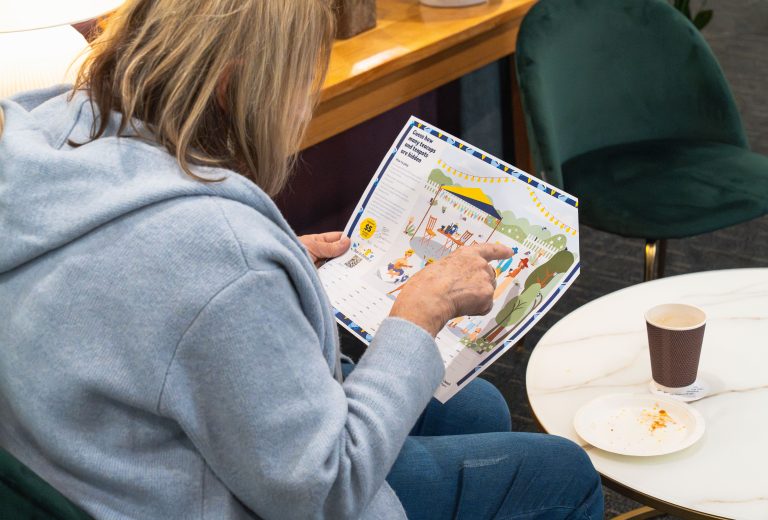
ID: A women playing the Biggest Morning Tea ‘Guess how many teacups’ game to raise funds for Cancer Council.
More than 30 people came together recently for My Ability Pathway’s third and final Australia’s Biggest Morning Tea, raising an incredible $1,108 for Cancer Council and surpassing our fundraising goal of $1,000.
It was lovely to see so many familiar faces, with clients, support workers, team members, families and local supporters gathering to enjoy good food, great company and the chance to support a cause that touches so many lives.
Like many Australians, we all know someone who has been affected by cancer. Over the past three years, these events have given us the opportunity to come together, show our support and give back in a meaningful way. Thanks to the generosity of everyone involved, we have now raised over $3,500 for Cancer Council since hosting our first Biggest Morning Tea.
This year’s event was particularly special. Not only did we exceed our fundraising target, but we were also heartened by the strong turnout and the sense of connection that filled the room. From delicious treats and coffee to raffle prizes and plenty of laughter, the morning was a reminder of what we can achieve when we come together.
As we close the chapter on our Biggest Morning Tea tradition, we do so with immense gratitude to everyone who has supported us over the past three years. While this marks the end of our involvement with this particular fundraiser, it certainly won’t be the end of our commitment to supporting meaningful causes.
We look forward to turning our attention to other worthwhile initiatives in the future and continuing to create opportunities for our community to make a difference.
Thank you to everyone who attended, donated, purchased raffle tickets, contributed prizes and helped make our final Biggest Morning Tea such a memorable success. Together, we have made a real difference.
Special thanks to the businesses and individuals who supported this event through donated goods:

ID: Two men walking towards the camera. The man on the left has Down Syndrome.
For Dave, working in the disability sector was never just about finding a job – it was about finding something that meant more.
Like many, his journey started with study. While completing a Certificate III in Individual Support (Ageing and Disability) through TAFE, Dave was introduced to My Ability Pathway (MAP) during a presentation. What stood out wasn’t just the information – it was the feeling he got about the organisation itself.
“I thought they seemed very, very professional,” Dave says. “So I thought, I’ll give them a buzz and see if there is the possibility of a job.”
That one decision turned into the beginning of a career.
Dave joined MAP as a Support Worker while still studying – an opportunity that gave him immediate, real-world experience in a role built around people, not just tasks.
What drew him in initially still holds true today.
“Their professionalism and their 1:1 care really appealed,” he says. “And they had friendly staff.”
It’s a simple observation, but one that reflects something deeper about the work – the importance of genuine connection and consistency in support.
Because at its core, this industry isn’t about ticking boxes. It’s about showing up for someone else.
Within just six months, Dave transitioned into a Key Worker position – a natural progression that reflects both his commitment and the opportunities available within the sector.
His role has since expanded beyond direct support into leadership and coordination.
“I’ve had a little bit more hands on with administration… helping teach other workers and running the house day to day,” he explains. “A lot of paperwork – it’s a good challenge.”
It’s a shift that highlights something often overlooked: growth in this sector doesn’t mean stepping away from people – it means finding new ways to support them, while also supporting your team.
Ask Dave what he enjoys most about his role, and his answer is immediate.
“Probably a bit of the teaching and making a difference to other people’s lives.”
There’s a quiet honesty in that response. It speaks to the heart of disability support – that the reward isn’t about recognition, but about impact.
It’s about what you can give.
And that perspective shapes how Dave sees the work as a whole.
“Any of us could be in that position at any time,” he says. “It’s nice to know that there are caring people out there.”
For anyone considering a career in the sector, Dave’s advice is simple:
“Definitely jump at it – because it’s very rewarding. Not just for yourself, but for the clients as well.”
It’s a reminder that this kind of work asks something of you – your time, your patience, your empathy – but it also gives something back that’s hard to find elsewhere.
A sense of purpose.
A chance to grow.
And the opportunity to make a real difference in someone’s everyday life.
Because in the end, it’s not about the job title.
It’s about the impact you leave behind.
If you have experience as a Support Worker in aged care or disability and are looking for the stability of a rostered line of 38+ hours per week, we’d love to hear from you. Explore current opportunities and apply via My Ability Pathway Careers.
Barbara Lightburn

ID: A woman playing Yahtzee
Many people see turnover in the disability sector as a problem that organisations should always try to fix. However, the reality is more complex. In our industry, the work is demanding. Supporting people with disability requires emotional resilience, strong teamwork, and a commitment to consistently high standards. It is meaningful work, but it is not easy work. Because of this, not every person who enters the sector will find the right fit in every organisation. And that’s OK.
At MAP, we recognise something important about culture: alignment matters more than retention at any cost. Sometimes, the best outcome for both the organisation and the person is realising that the environment is not the right fit. Leaving when values do not match is not a failure. It is clarity.
Too often, turnover is treated purely as a recruitment problem. Organisations focus on hiring faster, filling rosters, or increasing retention at any cost. But a leadership lens asks a different question: what is turnover telling us about the organisation itself?
Sometimes turnover signals problems in systems, leadership, or support. But at other times, it simply reflects a natural process of cultural alignment. When organisations are clear about their expectations and values, people are better able to decide whether that environment is the right fit for them. In this sense, turnover can be a sign that culture is becoming clearer, not weaker.
The disability sector experiences higher workforce turnover than many other industries. Research on the NDIS workforce suggests annual turnover rates of around 17–25%, compared with an average of about 12% across all sectors.
There are several reasons for this. The work can be emotionally demanding. Team members support people through complex situations and must respond with professionalism, patience and consistency. At the same time, participant needs, schedules and circumstances can change quickly.
Many people join the sector because they want to help others, which is a powerful motivation. However, delivering high-quality services also requires strong teamwork, accountability and the ability to work within clear systems.
When expectations are unclear, people can feel frustrated or disconnected from their roles. Clear expectations help people understand how to succeed.
This is why culture matters.
Many organisations describe their culture with words like compassion, respect, or teamwork. But real culture is not just about posters or slogans. Culture is defined by how decisions are made, how people behave and what standards are reinforced every day.
At MAP, we use the MAP Way of Working, or WoW, to make our culture clear and visible. The WoW gives us a shared way of working together. It guides decisions, sets clear expectations for behaviour, and helps leaders keep standards consistent across the organisation.
A key idea behind the MAP Way of Working is simple:
Quality you can feel starts with standards you can see.
People should not have to guess what good looks like. Expectations should be clear, practical and consistently applied.
We also believe that quality does not happen by accident. Great services are engineered. Participants and families should not have to hope for a good shift or a great support worker. The system should create that consistency.
As we often say at MAP:
People shouldn’t have to hope they get a good shift — the system keeps the promise.
This approach moves responsibility from chance to careful planning. When systems are strong and expectations are clear, both team members and participants benefit.
Strong teams work best when everyone knows what is expected of them.
At MAP, we focus on behaviours like:
One leadership principle we teach is “no surprises.”
When issues come up, we encourage people to speak up early so they can be fixed quickly. Small problems are easier to solve than big ones. This mindset is captured in another MAP leadership phrase:
Early flag. Fast fix.
Raise concerns early, while they are still small and easy to manage. Then act quickly to solve them. This approach helps prevent last-minute crises and builds a culture where people feel responsible for solving problems instead of avoiding them.
In healthy teams, accountability is not about punishment. It is about showing respect. When people hold each other accountable, they recognise that their actions affect the team, the organisation, and the people we support.
Peer-to-peer accountability is often the most powerful form of accountability. Team members help each other stay on track because they care about shared standards and outcomes. Holding someone accountable means you care enough about them and the team to have an honest conversation.
We strongly believe that everyone has hidden potential. The role of leadership is to create the environment where that potential can emerge. Empowering people does not mean lowering expectations. In fact, it means the opposite.
People grow when they have high expectations and clear support. When team members know what is expected and feel that leaders believe in them, they are more likely to step up, take ownership, and contribute fully to the team.
Even with clear systems and strong leadership, not everyone will feel that the organisation’s culture is right for them. Some people prefer workplaces with less structure or accountability. Others may find that disability support work is different from what they first thought. When this happens, it is important to be honest.
Organisations should not lower their standards just to reduce turnover. Doing this can weaken the culture and affect the quality of services for participants. Instead, organisations should be clear about their expectations and let people decide if the environment is right for them. Sometimes this leads to growth and development.
Other times, it means someone chooses a different path. Both outcomes can be positive.
When people leave because the culture is not the right fit, it can actually make the remaining team stronger. Teams work best when everyone shares the same commitment to standards, accountability, and working together.
When those expectations are clear, people who align with the culture tend to thrive. They feel a sense of purpose and ownership in the work they do. Those who do not fit often find workplaces that suit their preferences and style better. In this way, turnover is not always a failure. Sometimes, it is just part of building the right team.
At MAP, we work to build a culture where expectations are clear, systems support quality, and people feel empowered to do their best.
Our goal is simple:
MAP is known for one thing: quality you can feel, because we built our system to deliver it.
When culture is clear and standards are visible, everyone benefits.
Participants get better support.
Teams work together more effectively.
And people can decide if the organisation’s way of working is right for them.

ID: A smiling woman with dark hair wearing a green top.
Career changes can often feel daunting, especially when moving into a completely different industry. But as Skye has discovered since joining My Ability Pathway (MAP) as Workforce Planner, the skills you develop throughout your career can be more transferable than you might think.
As MAP’s Workforce Planner, Skye plays a key role in ensuring the organisation’s services run smoothly.
“As MAP’s Workforce Planner, I coordinate client support schedules and support operational planning,” Skye explains. “My role focuses on streamlining processes, analysing data, and providing behind-the-scenes support so teams can deliver consistent, high-quality outcomes for our clients.”
While much of the work happens behind the scenes, it plays an important part in ensuring teams have the structure and support they need to deliver the best possible outcomes.
Before joining MAP, Skye spent more than 25 years working in the franchising industry in roles spanning legal and compliance, finance, debt recovery and administration. Those experiences provided a strong foundation in organisation, planning and operational systems.
Today, she’s applying those skills in a new environment.
“My goal at MAP is to continue strengthening workforce planning and operational systems while supporting the team to work efficiently and confidently,” she says. “I’m rapidly learning about the disability sector while contributing to MAP’s ongoing growth and improvement.”
Skye’s journey to MAP began in an unexpected way.
“In late 2025, MAP identified a need for stronger workforce planning and operational support,” she explains. “Through a school-pick up conversation with Charlotte, I was introduced to the opportunity – it quickly became clear the role aligned well with my skills and experience.”
Not long after, Skye stepped into the newly created Workforce Planner role and began applying her experience to a sector focused on supporting people and communities.
Transitioning into disability services brought some new perspectives and learning opportunities.
“The biggest adjustment has been shifting from a process-driven environment to one where participant outcomes come first,” Skye says.
“While systems and structure remain important, flexibility is essential in disability services. Learning to balance efficiency with care-focused decision-making has been a rewarding challenge.”
For anyone considering a career change into the disability sector, Skye believes transferable skills are incredibly valuable.
“Don’t underestimate the value of your transferable skills!” she says. “Skills like organisation, planning, communication, and problem-solving are highly relevant.”
She also encourages people to approach the change with curiosity and patience.
“Be open to learning, ask questions (I’ve asked plenty!) and give yourself time to adjust. MAP is very supportive and encourages people to grow into their roles.”
These skills don’t just help individuals transition into new roles – they also strengthen organisations.
“Transferable skills bring fresh perspectives and practical solutions,” Skye explains. “They help improve processes, support teams, and ensure services run smoothly.”
“At MAP, these skills directly contribute to better coordination, stronger operations, and improved outcomes for our clients.”
Like any role, workforce planning comes with both rewarding moments and challenges.
“A highlight is seeing schedules, systems, and processes working well and knowing the team feels supported,” Skye says.
At the same time, the role requires strong organisation and adaptability.
“A challenge is managing multiple moving parts across the organisation – but staying organised, adaptable, and calm helps.”
What makes a difference, she says, is the supportive culture at MAP.
“The collaborative culture at MAP makes a big difference.”
For Skye, one of the most important things people should know about working at MAP is that diverse experiences are valued.
“MAP values diverse experience and supports people to succeed, regardless of their background,” she says.
“Even if you come from a different industry, your skills can make a real and meaningful impact here – for both the team and the people we support.”
Nicole Martin

ID: Nicole Martin, Finance and Systems Coordinator at MAP

If you’ve never met me before, I’d describe myself as someone who cares deeply and works hard. I’m the kind of person who likes things to make sense. I like structure, clear expectations, and systems that actually work. I’m also fiercely loyal, especially to people I trust. I’m the person who will problem-solve and keep going even when I’m running on fumes… which, looking back, explains a lot!
I’ve always had a few quirks that make me me. I can hyperfocus like it’s an Olympic sport when I’m interested in something. Building processes, making things more efficient, finding ways to improve the way we work – I love all that. My brain is constantly busy – it’s either in full sprint mode or it’s refusing to move at all.
For me, a good day looks like achieving through meaningful work, supporting others, solving something that’s been stuck, and still having enough mental energy left to be present at home. It’s the kind of day where I finish feeling satisfied rather than drained. Those days are gold.
Before my diagnosis, I used words like “busy” and “all over the place” to describe how my brain worked. In reality, it felt like I was constantly managing myself.
When people think of me, I hope the first thing they see is not the diagnosis! I want them to see someone capable. Someone reliable. Someone who genuinely cares – a person who wants to do things properly and make things better, not just for myself but also for the people around me.
When I look back now, there are so many parts of my life that make more sense since diagnosis.
I could be incredibly driven, productive, and switched on … and then suddenly hit a wall. I could hold huge responsibilities, yet feel completely overwhelmed by small tasks. And I could keep everything together at work but then feel like I’d fall apart the second I got home. I could be organised in some areas, but totally disorganised in others – not in any typical way, but in a “why is this so hard for me?” way.
There were absolutely moments where I felt different and couldn’t explain why. It always felt like I was working twice as hard just to keep up with the basics. I didn’t necessarily think I was failing – I just thought I was … exhausted.
Over time, I developed coping strategies without even realising what they were. I relied heavily on task lists, even if I didn’t complete them, and created systems to hold my life together. I learned how to mask, especially in professional environments – looking calm, capable, and in control while my brain was doing backflips behind the scenes.
I learned how to push through. And I got very good at it. It was exhausting.
Strengths were always there, too; I just didn’t understand them properly. My ability to see patterns, to problem-solve, to focus deeply when something mattered, to work fast under pressure, to care about people and outcomes. Those things weren’t new after diagnosis, they were present all along.
However, so were misunderstandings. The biggest one was a story I told myself: that if I was struggling, it meant I wasn’t trying hard enough – or that I was lazy. Other people misunderstood too sometimes, assuming if you can do the big things, you can also do the small things. But they don’t see how much energy it takes to get there.
I didn’t seek a diagnosis because I suddenly woke up one day and just decided to. It was more like I reached a point where I couldn’t ignore the patterns anymore, especially after having my daughter and those patterns got stronger.
I’d spent years working so hard to stay on top of everything. It worked – until it didn’t. Burnout cycles became more obvious. Overwhelm felt heavier. The mental load was constant. I started to realise that I wasn’t dealing with “stress” or “life.” I was dealing with something deeper in how my brain processed the world.
There wasn’t a single turning point, but many moments that stacked up. Moments where I’d think, “it shouldn’t feel this hard”. Moments where I was doing everything “right” but still struggling. Moments where people would say “just do it” and I couldn’t.
I saw information about ADHD in adults, especially women, and something clicked.
Of course, I had fears and hesitations, and questioned myself constantly. Worrying I was being dramatic, I was afraid I’d be dismissed. I worried that it would seem like I was making excuses. And I worried people wouldn’t take me seriously because I was “functioning.”
If I’m being honest, part of me stressed that if I got assessed and didn’t get a diagnosis, I’d be back at square one with no explanation and no direction.
The process surprised me in a few ways. For one, it was more emotional than I expected. Not just about ticking boxes, I had to reflect on my whole life, revisiting childhood experiences, school, relationships, work … I saw the same patterns at every stage. It was validating, but also confronting.
During the waiting period, my brain did what it does best: it analysed everything. I was constantly reflecting, replaying, second-guessing, and connecting dots. It felt like I was standing on the edge of an answer without being able to grab it yet.
When I received my diagnosis, I didn’t feel one emotion – I felt a huge mix of them.
The biggest was relief, a real, physical relief. Like someone had finally handed me the missing piece of the puzzle. I wasn’t crazy. I wasn’t failing at life in secret.
There was also grief. Grief for younger me, and for all the years I spent being hard on myself. Grief for the times I pushed through when I needed support. Grief for the times I thought I was broken.
There was validation too. And some confusion. Even when something makes sense, it still takes time to absorb it. It shifts the way you see your past and your present at the same time.
I did see myself differently after diagnosis. Not as someone who was both “too much” and “not enough”, but as someone whose brain is wired differently, someone who coped without understanding why.
First, I told people I trusted, people I knew wouldn’t judge me or minimise it. I didn’t want pity. I didn’t want a big emotional moment. I wanted to be understood.
Giving myself time helped me process it in a healthy way. Talking things through. Reading. Learning. Reflecting – and letting myself feel what I felt without trying to rush a “positive spin.” Because it’s not one feeling, it’s a whole journey.
Since diagnosis in June 2025, a lot has changed internally, even if externally it looks similar.
I’m still me. I still work hard. I care a lot. I still love systems, structure, and improving how things run. But I understand myself now – and that has changed everything.
I’ve become more intentional about how I work and communicate, and learned that I need clarity. I need structure, with time to focus without interruptions, planning my energy and not only my time. My boundaries are necessary – and I’ve stopped treating burnout as a personal failing.
Some adjustments have supported my wellbeing. I’m more aware of overwhelm and realistic about my capacity. I’m more willing to say, “I need this in writing,” or “I need time to think.”
The strengths of my neurodivergent identity are huge. My hyperfocus. My ability to solve problems fast. My drive to improve systems. My ability to think strategically and connect dots quickly. Creativity. Passion. Emotional insight. These are not “random personality traits”, they’re part of how my brain works.
One misconception I would love to challenge is that neurodivergence equals inability. It doesn’t. It means difference. The environment and systems matter – a neurodivergent person thrives, not by becoming someone else, but by being supported to work in a way that matches how their brain functions.
If you’re thinking you might be neurodivergent but you don’t have a diagnosis, the biggest thing I can say is, you’re not making it up. And you’re not alone.
You don’t need to wait for a diagnosis to learn to understand yourself. Notice your patterns. Learn about neurodivergence from credible sources. Reflect on what helps you thrive and what drains you. Talk to safe people. Give yourself permission to explore without shame.
Other support options beyond a formal diagnosis include therapy, coaching, work accommodations, peer support and practical strategies. Self-awareness alone is life changing. Diagnosis can be helpful, but isn’t the only path to self-understanding.
Everyone’s journey is different, because everyone’s brain, life experience, trauma history, personality, and environment are different. Some people seek diagnosis early, some late. Some never. Some have access to support while others don’t. There’s no “right” way to do this.
For colleagues, leaders, and allies, inclusion is often simpler than people think, starting with communication that’s clear and respectful. It looks like giving people information in their preferred format, or setting clear expectations without assuming everyone processes the same way. It looks like flexibility and trust.
What helps me feel supported is not being treated as though I’m fragile. It’s being treated like I’m capable, with the understanding that my brain works differently. Meaningful inclusion exists when workplaces not only talk about diversity, but design systems that allow different brains to succeed.
Neurodiversity awareness, to me, means understanding that difference isn’t a flaw.
Recognise that people bring different brains, processing styles, and strengths to the table. Move away from the idea of “one right way” to work, or communicate, or succeed.
One message I’d love readers to take away from my story, is this: you can be successful and still be struggling. You can be high-performing and still be exhausted. You can look like you’re coping and still be drowning inside.
Today, my self-acceptance looks like working with my brain instead of fighting against it. I’ve built support systems instead of relying on sheer willpower. I’m kinder to myself, not because I’m making excuses, but because I finally understand my truth.
My understanding of “difference” has massively evolved. I used to see difference as something to hide. Now, I recognise it is something to understand. To work with. Differences are strengths, not despite them, but because of them.
Honestly, I’m still learning. But I’m learning from a place of compassion now, not criticism.
And that’s made all the difference.
