We value your privacy
This website uses technical, functional and analytical cookies that do not infringe on your privacy.
General purpose platform session cookies are usually used to maintain an anonymised user session by the server.


ID: Photo of a group of people outdoors having a picnic and playing games.
Have you ever come home from an activity and thought, “That filled the afternoon, but it was not really for me”? A busy calendar can look positive from the outside. Yet attending activities and feeling connected are not necessarily the same thing. Meaningful community participation begins with what you enjoy, who you want to spend time with and how you want to take part. A good starting question is not “How many outings did we organise?” but “Was this worth doing for you?”
Community might mean a local club, an art class, a library, a familiar café or time with neighbours. It might involve a disability-specific group, a mainstream activity, an online interest group or a combination. No single setting is automatically the most inclusive for everyone. The important questions are whether you want to be there, can participate in a way that suits you and have opportunities for the kind of connection you value. Enjoyment is a valid reason to take part. You do not need to turn every interest into a lesson or a measurable achievement.
Consider a hypothetical person who enjoys plants and wants to try a community gardening group. Getting there matters, but so does what happens after arrival. Can they reach the work area? Are instructions accessible? Is there a task they actually enjoy? Does someone speak directly with them rather than only with their support worker? These details can determine whether an outing becomes a valued part of the week. Meaningful participation is not about making someone more sociable. It is about making room for the involvement they want.
Start with an interest, not a vacant place on a program. Ask what you would like more of: time outdoors, creative expression, familiar conversation or a chance to learn. Being unsure is fine. Looking at a few options can be part of finding out.
Check the details that matter to you, including transport, accessible toilets, noise, seating, communication and breaks. In regional areas, consider the whole journey, including getting home. A venue’s general claim that it is accessible may not answer your particular questions. With your permission, a supporter can help ask about adjustments without sharing unnecessary personal information.
Ask whether a short visit or introductory session is possible, and clarify any charges first. Agree what help you want during the visit. Some people prefer an introduction and then space; others want ongoing assistance to communicate or take part. Neither approach is a better form of independence.
Afterwards, ask: did I enjoy it, feel included and have enough say? What would I change? The answer might be a different time, a smaller group, more assistance or a different activity altogether. Choosing not to return is useful information, not a failure.
The NDIA’s social and recreation support guidance distinguishes disability-related assistance from ordinary activity expenses. Depending on individual circumstances and funding criteria, the NDIS may fund extra help needed because of disability. General costs that everyone pays, such as ordinary membership or entrance fees, remain the participant’s responsibility. Do not assume that an activity, transport arrangement or support charge is funded simply because it links to a goal. Check your plan and current guidance before committing. A support coordinator, where involved, can help clarify questions; they do not approve NDIA funding.
There can be pressure to fill every available hour or keep adding new experiences. A familiar weekly visit may be more valuable than several unfamiliar outings. Rest, time alone and changes of mind also deserve respect. Families and support teams can help by noticing barriers without deciding what a satisfying social life should look like. Community organisations have a part to play too: welcoming communication, workable adjustments and direct engagement should not depend entirely on a support worker’s presence. Paid support can assist participation, but it cannot guarantee friendship or belonging.
The most useful next step might be small: asking about a class, returning to a familiar place or finding a way to join a conversation. Success is not always a larger calendar. It might be greater choice, a comfortable routine or taking part in something you value. MAP’s published community approach emphasises individual interests and connection. To explore assistance in the Barossa, Gawler or Adelaide’s northern suburbs, read about MAP’s disability support services and social and community participation. Begin with what matters to you, then consider what support would make it possible.
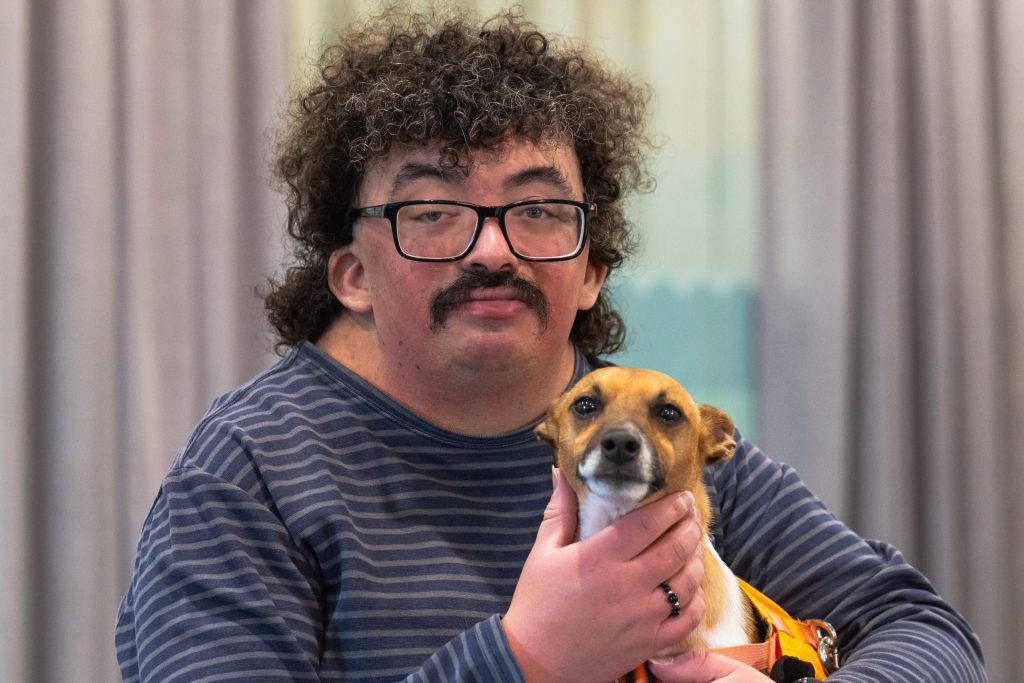
ID: Man sitting and facing the camera holding his pet dog.
For Malcolm Smith, independence doesn’t mean doing everything alone.
Instead, it means having the right support to live life on his own terms.
“There’s two types of independence,” Malcolm explains. ” Independence with help has been very much appreciated.”
Today, Malcolm lives independently with his dog, Bo, in a home that’s filled with routine, purpose and the confidence to enjoy everyday life. It’s a life that wasn’t possible before accessing support through the NDIS.
For Malcolm, support isn’t about someone taking over. It’s about having someone there when he needs it.
Whether it’s preparing healthy meals, attending medical appointments, getting out into the community or trying something new, having trusted support workers has helped Malcolm maintain his independence while building new skills and confidence.
“I’ve been able to cook better meals,” he says. “Just having someone with me when I need it to take me to doctor’s appointments and take me around if I want to go somewhere.”
His week is now full of activities that bring connection and enjoyment. Mondays are spent at an art group. Wednesdays are for cooking. Thursdays include water aerobics with one of his support workers, while Fridays are another opportunity to prepare a hearty meal. Monthly group dinners and social outings provide even more chances to connect with others, and weekends are often spent catching up with family.
These are things Malcolm says simply weren’t part of his life before.
“Yes,” he says. “I couldn’t do these things before.”
Before receiving NDIS supports, Malcolm spent many years living with chronic migraines that significantly impacted his daily life.
“For about 10 years I was mainly alone, very isolated,” he says. “Because of the pain… I wasn’t doing any of that. I wasn’t happy.”
The combination of physical health challenges and isolation meant everyday activities became difficult, and social connection was limited.
Today, life looks very different.
Support through the NDIS has helped Malcolm access community activities, maintain his home with the assistance of a cleaner, and receive equipment that has made a real difference to his independence.
A new mobility scooter has made shopping easier and given him the freedom to take Bo for walks.
“My new gopher has been extremely helpful with taking Bo on his walks,” Malcolm says. “And now I have something that helps me go to the shops better.”
It’s these practical supports that have opened the door to greater independence and a more connected life.
When asked what the right support means to him, Malcolm’s answer is simple.
“The right support is the ability to be yourself,” he says.
“To have someone help you be yourself and help you do your daily activities. And someone who pushes you – only a tiny little bit,” he says. “I don’t like to be pushed too much, only a tiny bit to do something different.”
That balance of encouragement and respect has helped Malcolm grow in confidence while remaining in control of his own life.
For Malcolm’s mum, Carolyn, watching her son’s confidence grow has been one of the greatest rewards.
“As a parent I am so relieved to have the supports in place through the NDIS because it has taken so much pressure off me,” she says.
After raising Malcolm and his sister on her own following the loss of Malcolm’s father when he was young, Carolyn spent many years as his primary support.
Today, she sees a very different Malcolm.
“It’s been fantastic as a parent to see Malcolm be able to grow through the NDIS and My Ability Pathway,” she says.
“The people who come in and support him are really caring and kind people, and I think that’s really important.”
Perhaps the biggest change has been Malcolm’s confidence.
“He was very scared in the beginning of having people coming into his home,” Carolyn recalls. “Now he’s really happy to have people come in. In the past he would never open the door, wouldn’t answer his telephone, and now to see his confidence grow… I’m just proud of the person he has become.”
Malcolm’s story is a reminder that independence looks different for everyone.
Sometimes, independence means asking for help. It means having people around who encourage you, respect your choices and provide the support you need to live the life you want.
With the right supports through the NDIS, Malcolm has gone from years of isolation to a life filled with connection, routine, confidence and choice.
And for Malcolm, that’s exactly what independence means.
